Visual guide
Requirement 9 of 12
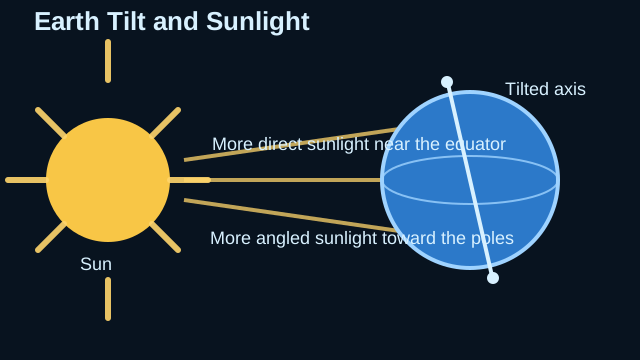
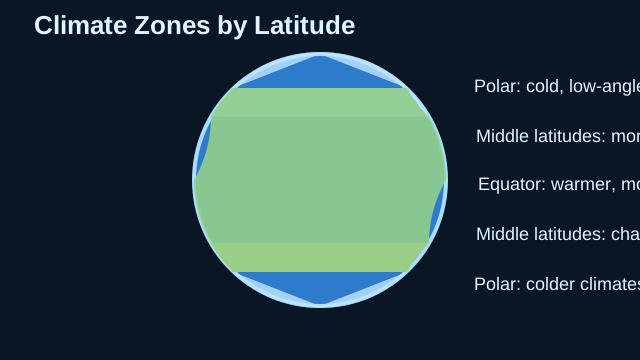
Explain how Earth's tilt affects climate near the equator, near the poles, and in regions between them.
Use these notes to explain why Earth's tilt changes the angle and intensity of sunlight around the globe.
Key ideas
Earth's Tilt and Climate discussion locked
Sign in or create an account to mark progress complete.
Navigate anywhere in this merit badge without losing your place.
Requirement 1
Meteorology and Climate
Open requirement
Requirement 2
Dangerous Weather Safety
Open requirement
Requirement 3
Weather Forecast Sources
Open requirement
Requirement 4
Pressure Systems and Fronts
Open requirement
Requirement 5
Wind, Rain, Lightning, and Hail
Open requirement
Requirement 6
Cloud Types
Open requirement
Requirement 7
Water Cycle
Open requirement
Requirement 8
Human Activity and Climate
Open requirement
Requirement 9
Earth's Tilt and Climate
Current requirement
Requirement 10
Weather Observation or Visit
Open requirement
Requirement 11
Weather Safety Talk
Open requirement
Requirement 12
Weather Careers
Open requirement